
Dry Needling for Jaw Pain: What to Expect and How It Is Used
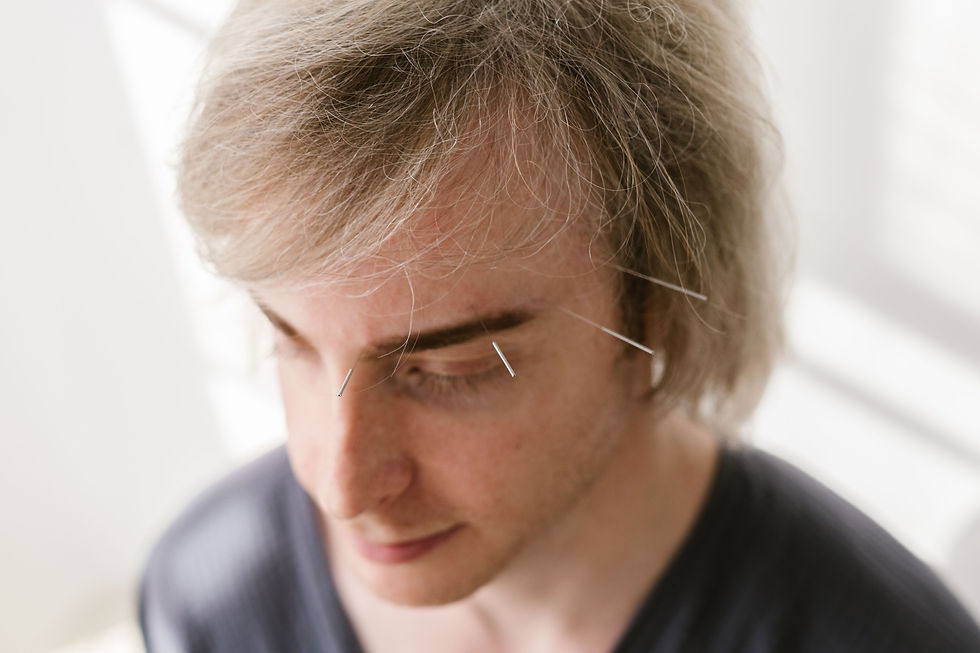
Dry needling for jaw pain is a technique some physiotherapists use when tight, tender chewing muscles are part of the problem. It is often searched for by people with temporomandibular disorder (TMD) who want to know whether it works, whether it hurts, and how many sessions they might need. This article explains how dry needling is used for the jaw muscles, what a session involves, what the research says, and who it may or may not suit.
For some people with temporomandibular disorders (TMD), tight or tender chewing muscles may contribute to ongoing jaw pain and restricted movement. Dry needling is one technique that a suitably trained physiotherapist may consider as part of a broader treatment plan, depending on the person's symptoms and clinical assessment. At Sydney TMJ Physio, people experiencing jaw-related concerns can explore physiotherapy options and discuss which approaches may be appropriate for their needs. Dry needling is not suitable for everyone, and research findings vary, so it is important to weigh potential benefits, risks, and alternatives with a qualified healthcare professional before proceeding.
What Is Dry Needling in the Jaw?
Dry needling involves inserting a very fine, solid needle into a tender spot within a muscle, often called a myofascial trigger point. The word dry refers to the fact that nothing is injected through the needle. When used for the jaw, the needle is placed in the muscles that move the jaw, rather than into the joint itself.
Which Jaw Muscles Are Treated?
Studies of dry needling in TMD have applied it to different muscle groups, including the masseter and temporalis, which are the main chewing muscles at the side of the face and temple. In some research, deeper needling has also been used for muscles such as the lateral pterygoid, which sits deeper beside the jaw joint and is treated only by clinicians with appropriate training.
How Is Dry Needling Different From Acupuncture?
Dry needling uses similar needles to acupuncture, but its purpose is different. It targets specific tender points in muscle based on a physical assessment, rather than following traditional meridian pathways. How it works is not fully understood, and several explanations have been proposed, so it is best described as a technique that may help some people with muscle-related pain.
Can Dry Needling Help Jaw Pain?
It may help some people, particularly when the pain comes from tender chewing muscles, but the evidence is not strong. TMD is the most common cause of orofacial pain of non-dental origin, and a network meta-analysis noted that around 42% of TMD diagnoses correspond to myofascial pain, which is the type of pain dry needling is aimed at.
What the Research Shows
Systematic reviews of dry needling for TMD report that it can reduce pain and improve function in some studies. However, one systematic review and meta-analysis concluded that clinicians can use dry needling for TMD but that, because of low-quality evidence and a high risk of bias in some studies, larger and better designed trials are needed. A separate network meta-analysis found no significant difference in pain reduction between dry needling and manual therapy, and ranked manual therapy as the most likely to reduce pain, followed by deep dry needling.
In practical terms, dry needling is a reasonable option to discuss for muscle-related jaw pain, but it is not a proven first choice, and it is usually considered alongside other treatments. Results vary and cannot be guaranteed.
Who May Be a Good Fit
Dry needling is most often considered for people with persistent, tender knots or tight bands in the jaw muscles, where hands-on treatment and exercise have not settled things enough, and who are comfortable with needles. It is generally used as one part of a broader plan.
When Dry Needling May Not Be the Right Choice
Dry needling is not suited to every type of jaw problem. Clicking from the joint disc, a locked jaw, nerve-type facial pain, dental problems and infection are not treated by needling the muscles, and they need their own assessment. If your pain does not fit a muscle pattern, your physiotherapist will refer you on.
What Does a Jaw Dry Needling Session Involve?
Assessment Comes First
Before any needling, your physiotherapist will take a history, examine how your jaw moves, check the chewing muscles and joints, and screen your neck. They will also ask about your health, medications and whether you have any reason to avoid needling. Dry needling is only considered if the assessment points to a muscle source of your pain.
The Needling Itself
You will be told what to expect and asked for your consent. The skin is cleaned, a fine sterile needle is inserted into the targeted muscle, and your physiotherapist watches your response throughout. You may feel a brief ache or a twitch in the muscle. The needle is usually left in for a short time or moved gently, and then removed.
After the Session
Most people go back to normal activities, though the muscle may feel sore for a time. Your physiotherapist will usually pair needling with gentle jaw movement, exercises and self-management advice, because the aim is to help your jaw move and function more comfortably, not just to treat a tender spot.
Does Dry Needling Hurt TMJ?
Experiences differ. The needles are very fine, and many people feel little on insertion. Some feel a brief sharp sensation, a dull ache or a muscle twitch, which can be uncomfortable even if it passes quickly. Because the face is sensitive, some people find needling around the jaw more noticeable than in other areas.
Soreness afterwards is common. Studies of dry needling report that a large share of participants, ranging from roughly a third to nearly nine in ten across different trials, noticed post-needling soreness, and in the studies that followed it up, this usually settled on its own. You can discuss ways to make the session more comfortable, and you can ask to stop at any time.
How Many Sessions of Dry Needling for TMJ?
There is no standard number. The research shows considerable variation in how dry needling is applied, and treatment protocols differ between studies, with a range of muscles treated and different numbers of sessions. Some small studies have used a short course, such as once a week for several weeks, but this does not mean it suits everyone.
In practice, the number of sessions depends on your response. A physiotherapist will usually reassess pain, jaw movement and function after the first few sessions, and may continue, change the approach or stop if there is no meaningful benefit. Dry needling is generally combined with exercises, manual therapy and education, so the overall plan matters more than any single technique.
Safety, Side Effects and Who Should Be Cautious
Dry needling is considered a low-risk procedure when done by a trained clinician, but side effects can occur. Common ones include soreness, minor bleeding or bruising at the needle site, and light-headedness or fainting in some people. Serious complications are uncommon, but the face contains important nerves, blood vessels and glands, which is why deeper needling around the jaw should only be performed by appropriately trained clinicians.
Please tell your physiotherapist before treatment if you take blood-thinning medication, have a bleeding disorder, are pregnant, have a fear of needles, have an infection or skin condition at the site, or have a weakened immune system. Seek urgent medical care if you develop fever, spreading swelling, or difficulty swallowing or breathing. Our clinic is not an emergency provider.
Dry Needling as Part of a Wider TMJ Treatment Plan
For most people, dry needling is not a stand-alone solution. Systematic reviews of manual therapy and exercise for TMD have reported improvements in pain and jaw movement in some studies, although the overall certainty of the evidence has often been rated as low. A typical plan combines hands-on treatment, a graded exercise program, advice on jaw habits, stress and sleep, and, where appropriate, dry needling for tender muscle points. The focus is on long-term function, not only short-term relief.
Dry Needling Myths and What the Evidence Supports
Myth: Dry Needling Cures TMJ Problems
Dry needling may reduce muscle-related pain for some people, but it does not cure TMD, and the research does not support guarantees.
Myth: Dry Needling Is Just Acupuncture
They use similar needles, but dry needling is directed at tender muscle points found on physical assessment, and it is used within a physiotherapy plan.
Myth: Dry Needling Works Much Better Than Manual Therapy
A network meta-analysis found no significant difference in pain reduction between dry needling and manual therapy, and manual therapy ranked highest. The better option depends on your findings and preferences.
Jaw Pain Treatment and Dry Needling in Balmain
At Sydney TMJ Physiotherapy in Balmain, we provide evidence-based assessment and treatment for jaw muscle pain, clicking, stiffness and restricted movement linked to TMD. Where appropriate, we can discuss whether dry needling for jaw muscles may suit you as part of an individualised, goal-oriented plan.
You can find us at 3 Montague St, Balmain. If tight, painful jaw muscles are affecting your eating, talking or sleep, you are welcome to book an assessment and talk through your options.
📅 Book a jaw pain physiotherapy session with Sydney TMJ Physiotherapy in Balmain and get a treatment plan tailored to your needs.
References
Dry Needling in Treatment of Temporomandibular Joint Disorders: A Systematic Review. Clinical and Experimental Dental Research (2025). https://pmc.ncbi.nlm.nih.gov/articles/PMC12415702/
The effectiveness of dry needling for patients with orofacial pain associated with temporomandibular dysfunction: a systematic review and meta-analysis. Brazilian Journal of Physical Therapy (2019), 23(1), 3-11. https://pmc.ncbi.nlm.nih.gov/articles/PMC6546838
Effectiveness of deep dry needling versus manual therapy in the treatment of myofascial temporomandibular disorders: a systematic review and network meta-analysis. Chiropractic & Manual Therapies (2023), 31(1), 46. https://pubmed.ncbi.nlm.nih.gov/37924127/
Treatment of temporomandibular myofascial pain with deep dry needling. Medicina Oral, Patologia Oral y Cirugia Bucal. https://pmc.ncbi.nlm.nih.gov/articles/PMC3482522/
Systematic review of dry needling trials reporting adverse events (post-needling soreness). Journal of Clinical Medicine (2020), 9(10), 3300. https://pmc.ncbi.nlm.nih.gov/articles/PMC7602246/
Armijo-Olivo, S., Pitance, L., Singh, V., Neto, F., Thie, N., & Michelotti, A. (2016). Effectiveness of Manual Therapy and Therapeutic Exercise for Temporomandibular Disorders: Systematic Review and Meta-Analysis. Physical Therapy, 96(1), 9-25. https://pmc.ncbi.nlm.nih.gov/articles/PMC4706597


Comments